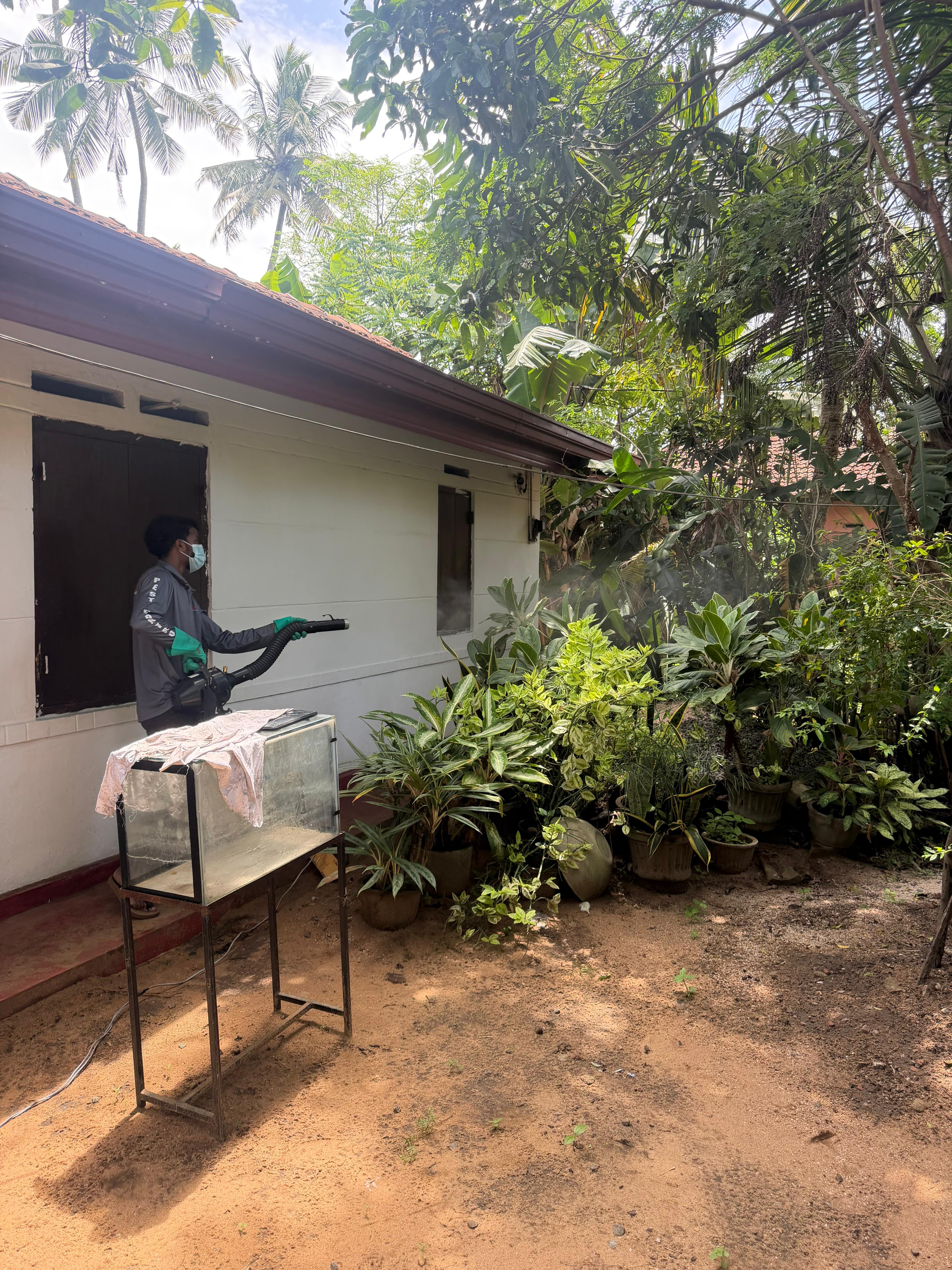
Dengue Prevention in Sri Lanka | Mosquito Control & Prevention Guide
Learn about dengue prevention in Sri Lanka, mosquito breeding sites, practical prevention measures, mosquito control, and how integrated pest management can sup
Learn about dengue prevention in Sri Lanka, mosquito breeding sites, practical prevention measures, mosquito control, and how integrated pest management can sup
Dengue Prevention in Sri Lanka: Understanding the Risks and Practical Prevention Measures
Dengue remains one of the most significant mosquito-borne diseases affecting Sri Lanka. Due to the country's tropical climate, seasonal rainfall, urban development, and the presence of Aedes aegypti and Aedes albopictus mosquitoes, dengue prevention continues to be an important public health priority throughout the year.
While dengue is often associated with the rainy season, mosquito breeding can occur whenever suitable conditions are present. Even small collections of clean, stagnant water can become breeding sites for dengue-carrying mosquitoes.
Understanding how dengue spreads and how mosquito breeding can be reduced is an important step towards creating healthier residential, commercial, educational, and industrial environments.
Understanding DengueDengue is a viral infection transmitted primarily through the bite of infected Aedes mosquitoes.
Unlike many mosquito species that are most active at night, Aedes mosquitoes are generally active during daylight hours, with increased activity often occurring during the early morning and late afternoon. This makes daytime prevention measures particularly important.
Dengue cannot spread directly from one person to another. Instead, mosquitoes become infected after biting a person carrying the virus and may later transmit it through subsequent bites.
Because mosquitoes require water to complete part of their life cycle, environmental management remains one of the most important aspects of dengue prevention.
Why Dengue Prevention Is Important in Sri LankaSri Lanka experiences climatic conditions that support mosquito breeding throughout much of the year.
Factors that contribute to mosquito activity include:
-Seasonal rainfall -High humidity -Warm temperatures -Urban development -Water storage practices -Construction activities -Improper waste disposalAccording to Sri Lanka's National Dengue Control Unit and the World Health Organization, community participation and source reduction remain central components of long-term dengue prevention.
Where Do Dengue Mosquitoes Breed?
Many people assume mosquitoes require ponds or large bodies of water to breed.
In reality, Aedes mosquitoes can breed in very small amounts of clean, stagnant water.
Common breeding locations include:
-Roof gutters -Plant trays -Flower pots -Water storage containers -Buckets -Construction materials -Discarded tyres -Coconut shells -Bottles and cans -Decorative water features -Air-conditioner drip trays -Blocked drains -Unused containersRegular inspections can help identify these locations before mosquito populations increase.
The Importance of Source ReductionSource reduction refers to identifying and eliminating mosquito breeding sites before mosquitoes complete their life cycle.
This may involve:
-Emptying water containers -Cleaning gutters -Improving drainage -Covering water tanks -Removing discarded containers -Maintaining outdoor areas -Regular property inspectionsThe World Health Organization and Sri Lanka's Ministry of Health consistently identify source reduction as one of the most effective long-term approaches for dengue prevention because it reduces opportunities for mosquitoes to breed.
Mosquito Prevention Around HomesResidential properties often contain numerous areas where water may collect without homeowners noticing.
Examples include:
-Balconies -Gardens -Roof gutters -Outdoor furniture -Children's toys -Plant containers -Roof terracesSimple weekly inspections after rainfall can help identify water accumulation before mosquito larvae develop.
Routine maintenance can support broader dengue prevention efforts throughout neighbourhoods.
Commercial Properties and Dengue PreventionMosquito management is also important for commercial facilities.
Examples include:
-Hotels -Apartment complexes -Restaurants -Schools -Warehouses -Offices -Factories -Construction sites -Shopping centresLarger properties may contain multiple outdoor areas where water can collect.
Routine inspections, maintenance programmes, and environmental management can help identify conditions that support mosquito breeding.
Integrated Mosquito ManagementModern mosquito control programmes generally combine several approaches rather than relying on a single treatment.
Integrated mosquito management may include:
-Property inspections -Source reduction -Environmental management -Larval habitat monitoring -Targeted treatments where appropriate -Community awareness -Follow-up inspectionsThis approach recognises that long-term mosquito management depends on addressing the conditions that allow mosquitoes to breed.
The Role of Professional Mosquito ControlProfessional mosquito control services may assist with:
-Property inspections -Identification of breeding sites -Risk assessments -Mosquito monitoring -Targeted treatment recommendations -Ongoing maintenance programmesProfessional assessments can be particularly useful for larger residential developments, commercial facilities, industrial premises, schools, hotels, and apartment complexes where mosquito breeding sites may not always be immediately visible.
Community ParticipationSuccessful dengue prevention depends not only on individual property owners but also on the surrounding community.
Neighbouring properties, public spaces, construction sites, schools, and commercial premises all contribute to the local environment.
Community clean-up activities, awareness campaigns, and routine inspections can support broader mosquito control efforts.
The WHO has highlighted community engagement as an important component of sustainable dengue prevention in Sri Lanka.
Practical Tips for Dengue PreventionProperty owners can take several practical steps to reduce mosquito breeding opportunities:
-Inspect your property every week.
-Empty containers holding stagnant water.
-Clean roof gutters regularly.
-Keep drains clear.
-Cover water storage tanks.
-Maintain gardens and landscaping.
-Dispose of unwanted containers responsibly.
-Monitor outdoor areas after rainfall.
-Encourage neighbourhood participation.
These measures may help reduce the conditions that support mosquito breeding.
ConclusionDengue prevention begins with understanding how mosquitoes breed and identifying conditions that allow their populations to increase.
In Sri Lanka, regular property inspections, elimination of standing water, environmental management, and community participation all contribute to reducing mosquito breeding opportunities. Professional mosquito control services may also support these efforts through inspections, monitoring, and targeted treatments where appropriate.
Maintaining awareness throughout the year not only during periods of heavy rainfall can help property owners create environments that are less favourable for mosquito breeding and support broader dengue prevention efforts across residential and commercial communities.
Contact us for a free consultation and site inspection.