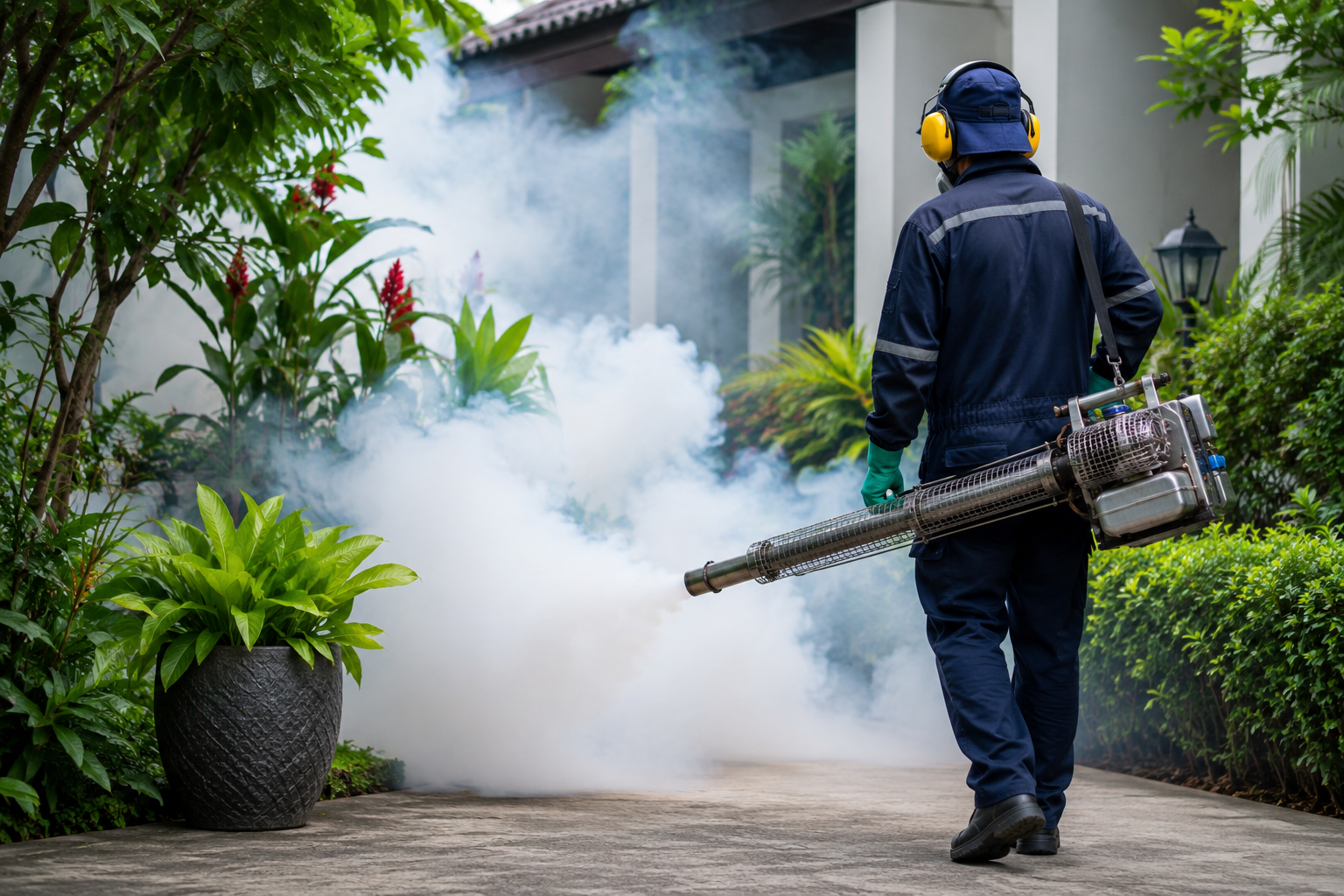
Fogging Services for Homes and Businesses in Sri Lanka
Professional fogging services for homes and businesses in Sri Lanka. Control mosquitoes, flies, and dengue risks with safe, effective treatments.
Professional fogging services for homes and businesses in Sri Lanka. Control mosquitoes, flies, and dengue risks with safe, effective treatments.
Fogging is one of the most common and effective ways to manage flying pests in tropical climates. In Sri Lanka, where mosquito‑borne diseases like dengue are a recurring concern, fogging services have become a standard part of public health and private property maintenance. The country experiences two major monsoon periods, and during these times the population of Aedes aegypti and Aedes albopictus mosquitoes rises sharply, increasing the risk of dengue transmission.
But fogging is not a single, one‑size‑fits‑all treatment. There are different methods, different chemicals, and different applications depending on what you are trying to control and where. This article explains what fogging services actually involve, when they are needed, and how to choose the right approach for your property.
What Does a Fogging Service Include?
A fogging service is a pest control treatment that uses a machine to release a fine mist or smoke of insecticide into the air. The goal is to kill flying insects that are active in the treated area at the time of application. In Sri Lanka, fogging is most often used against adult mosquitoes, but it can also target houseflies, sandflies, and midges.
A standard fogging service from Famans usually includes a pre‑treatment inspection to check for breeding sites and identify the main pest species. The technician then selects the appropriate fogging method based on whether the area is indoors or outdoors, the size of the space, and the type of pest. After the fogging is completed, the technician provides clear instructions on re‑entry and any post‑treatment precautions.
Fogging is typically a knockdown treatment rather than a residual barrier. That means it kills the insects that are present during the service, but it does not leave a long‑lasting chemical layer on surfaces. For ongoing protection, fogging is usually combined with other methods like larvicide applications, source reduction, or residual spraying. In Sri Lanka, the National Dengue Control Unit also emphasises that fogging alone is not enough; removing standing water and using larvicides in potential breeding sites are equally important.
Types of Fogging Services AvailableThere are two main types of fogging used in pest control, and they serve different purposes.
Cold fogging, also called ULV or ultra‑low volume fogging, uses a machine that pushes insecticide through a high‑pressure nozzle to create extremely fine droplets, typically in the range of 5 to 20 microns in diameter. These droplets stay suspended in the air for longer and drift into hard‑to‑reach areas. Cold fogging is mostly used outdoors, in large open spaces, and during daytime hours. It is the most common method for mosquito control in residential neighbourhoods and public spaces in Sri Lanka. Because the droplets are so fine, the volume of chemical applied per hectare is very low – often less than 200 millilitres – which makes it economical and environmentally considerate.
Thermal fogging uses heat to turn the insecticide solution into a dense, visible smoke. The smoke particles are smaller than those in cold fogging – often below 5 microns – allowing them to penetrate deep into cracks, crevices, and dense vegetation. Thermal fogging is more suited to enclosed spaces like warehouses, basements, and sewers, or for nighttime applications where the smoke can linger and reach hidden pest hiding spots. The visible smoke also helps the operator see where the fog is going, which can be useful in complex indoor layouts.
Both methods have their place. The choice depends on the environment, the pest, and the level of infestation. A good pest control provider will assess the site and recommend the right technique, rather than pushing one method for every job.
Common Pests Targeted by FoggingFogging is primarily used for flying insects. The most common targets in Sri Lanka are mosquitoes, especially the Aedes species that spread dengue and chikungunya. According to the Sri Lanka Ministry of Health, dengue cases typically peak during the monsoon months, with a first wave from May to July and a second from October to December. Adult mosquito control through fogging is a key part of the response during these periods.
Houseflies are another frequent target, particularly around food handling areas, garbage bins, and livestock facilities. Flies can carry pathogens that cause diarrhoeal diseases and food poisoning, so controlling them is vital for food safety and hygiene. Sandflies and midges, which can cause itchy bites and skin irritation, are also effectively controlled with fogging, especially in coastal and rural areas.
In some cases, fogging can help with certain crawling insects if the chemical is directed into their hiding places. However, it is not the primary treatment for cockroaches, ants, or bedbugs. For those pests, targeted residual sprays or gel baits are more effective. Fogging is not designed to leave a lasting deposit on surfaces, so it would not provide long‑term control of crawling pests.
When to Book a Fogging ServiceTiming matters for fogging. In Sri Lanka, mosquito activity spikes during and after the monsoon rains, from May to July and again from October to December. Fogging before these peak periods can reduce the number of adult mosquitoes and lower the risk of disease transmission. Municipal councils and health authorities often conduct area‑wide fogging when a dengue outbreak is declared, but individual homeowners and business owners can also take preventive action.
There are also specific situations where a one‑off fogging service makes sense. If there has been a confirmed dengue case in your immediate neighbourhood, fogging can help reduce the adult mosquito population around your home. This is particularly useful in densely populated urban areas where mosquitoes can travel short distances between houses. If you are hosting an outdoor event like a wedding, a party, or a corporate gathering, a fogging treatment before the event can keep the area comfortable for guests. If your business operates in the food industry, hospitality, or healthcare, regular fogging can help meet hygiene standards and reduce pest complaints from customers or staff.
For most residential properties, a quarterly fogging schedule is sufficient when combined with good housekeeping and regular drain checks. For commercial kitchens, hotels, and factories, a monthly or bi‑monthly fogging program is often recommended because these environments tend to generate more food waste, moisture, and harbourage that attract pests. The exact frequency should be determined by a professional inspection.
Safety and Precautions During FoggingFogging is safe when done correctly, but there are important precautions to follow. During the treatment, all windows and doors should be closed. Food, drinking water, and pet bowls must be covered or removed from the area. Pets and livestock should be kept indoors or moved to a safe distance. People with respiratory conditions like asthma should remain out of the treated area until the fog has fully cleared.
Most fogging chemicals break down quickly in sunlight and open air. The active ingredients – typically synthetic pyrethroids such as deltamethrin or permethrin – are photodegradable, meaning they lose potency when exposed to sunlight. This is why fogging is often scheduled for early morning or late afternoon, when mosquitoes are most active but the sun is not at its strongest.
Re‑entry is allowed once the fog has dissipated and the technician gives the all‑clear. The exact waiting period depends on the product used and the dosage applied, and the technician will advise you on this. In general, a brief period of ventilation is sufficient for outdoor fogging, while indoor applications may require a longer ventilation period.
It is also worth noting that fogging is not a substitute for removing breeding sources. Standing water in flower pots, gutters, old tyres, and blocked drains will continue to produce new mosquitoes long after a fogging treatment. The most effective pest control strategy always includes both fogging and source reduction. In Sri Lanka, public health campaigns consistently remind residents to clean their surroundings weekly to eliminate mosquito breeding sites.
What to Expect From a Professional Fogging ServiceWhen you book fogging services with Famans, the process is straightforward and transparent. You can expect a phone or online consultation where we ask about your property type, pest concerns, and any nearby sensitive areas like schools, hospitals, or food businesses. The technician arrives at the scheduled time, does a quick walk‑through, and explains what will happen during the treatment.
After the fogging, we provide a short report with details on what was used, where it was applied, and any follow‑up steps you should take. We also give you advice on how to reduce the chance of pests returning before your next scheduled service. This might include tips on sealing entry points, repairing leaks, and managing waste properly.
We do not use generic chemical cocktails. Each treatment is matched to the pest and the environment. We only use products that are approved by the Sri Lankan Pesticide Board and meet international safety standards – all our formulations are registered and have been tested for both efficacy and safety. Our machines are regularly calibrated to make sure the droplet size and dosage are correct, because incorrect calibration can reduce effectiveness or increase drift into non‑target areas.
Fogging as Part of a Long‑Term Pest PlanFogging is not a standalone solution. It works best when it is part of a broader pest management approach. For residential clients, this might mean fogging once a quarter plus monthly drain treatments and routine property checks. For commercial clients, it might involve a combination of fogging, residual wall sprays, baiting, and staff training on sanitation practices.
At Famans, we do not try to sell you more services than you need. We recommend a plan based on your actual pest pressure, your budget, and your property's layout. If a simple fogging treatment is enough, we will say so. If you need more, we explain why and give you a clear breakdown of what each service adds.
Where Famans Provides Fogging ServicesWe provide fogging services across Sri Lanka, with a focus on the major urban and suburban areas. Our teams operate in Colombo, Kandy, Galle, Negombo, Kurunegala, Matara, and many surrounding towns. For properties in remote or rural areas, we can arrange a custom visit based on the size of the job and travel distance.
We work with both residential homeowners and commercial clients, including restaurants, hotels, factories, warehouses, schools, and healthcare facilities. Every job is handled by a trained technician who understands the local pest patterns and the specific needs of your type of property.
Getting Started With a Fogging ServiceIf you are dealing with mosquitoes, flies, or other flying pests, a fogging service is a practical first step. You do not need to wait until the problem becomes unmanageable. Scheduling a treatment early in the season or right after a heavy rainfall can prevent a small issue from turning into a full infestation.
To book a fogging service with Famans, you can call us or send a message. We will ask a few basic questions to understand your situation and give you a time slot that works with your schedule. The technician will arrive on time, complete the treatment efficiently, and follow up to make sure you are satisfied with the results.
Fogging is a reliable, widely used method for flying pest control in Sri Lanka. With the right approach, the right timing, and the right provider, it can keep your property comfortable and your family or staff safe from the health risks that these pests carry.
Contact us for a free consultation and site inspection.